Community Blog
Your Car's Hidden Shield: What 2 Hours in Bengaluru Traffic Taught Me About Breathing Clean Air
TL;DR
A hands-on experiment using an Arduino-based PM2.5 sensor in Bengaluru traffic showed that keeping car windows closed with AC on recirculation reduces cabin PM2.5 by 70–80% within 3–5 minutes. With windows down, PM2.5 surged to 80–85 μg/m³ (AQI 150+). Bengaluru's 2025 air quality was its worst in 5 years, with just 2 "good" days out of 361. Replace your cabin filter every 12 months for maximum protection.
Every morning, millions of us climb into our cars, roll down the windows for a "fresh breeze," and merge into traffic. But what if I told you that fresh air might be slowly poisoning you?
This morning, I decided to find out. Armed with a DIY air quality monitor in my Skoda Kylaq, I drove through Bengaluru's peak traffic to answer one question: Does keeping my windows closed actually protect me from pollution? The results were shocking.
🔬 The Experiment Setup
I built a custom air quality monitoring system using an Arduino Uno and a particulate matter sensor to track PM1.0, PM2.5, and PM10 levels in real-time during my morning commute.

The plan was simple:
- Phase 1: Drive with windows down → measure pollution spike
- Phase 2: Close windows, turn on AC with recirculation → measure cleanup time
- Repeat: Multiple cycles over 2 hours to establish a pattern
📊 The Results: A 70-80% Difference
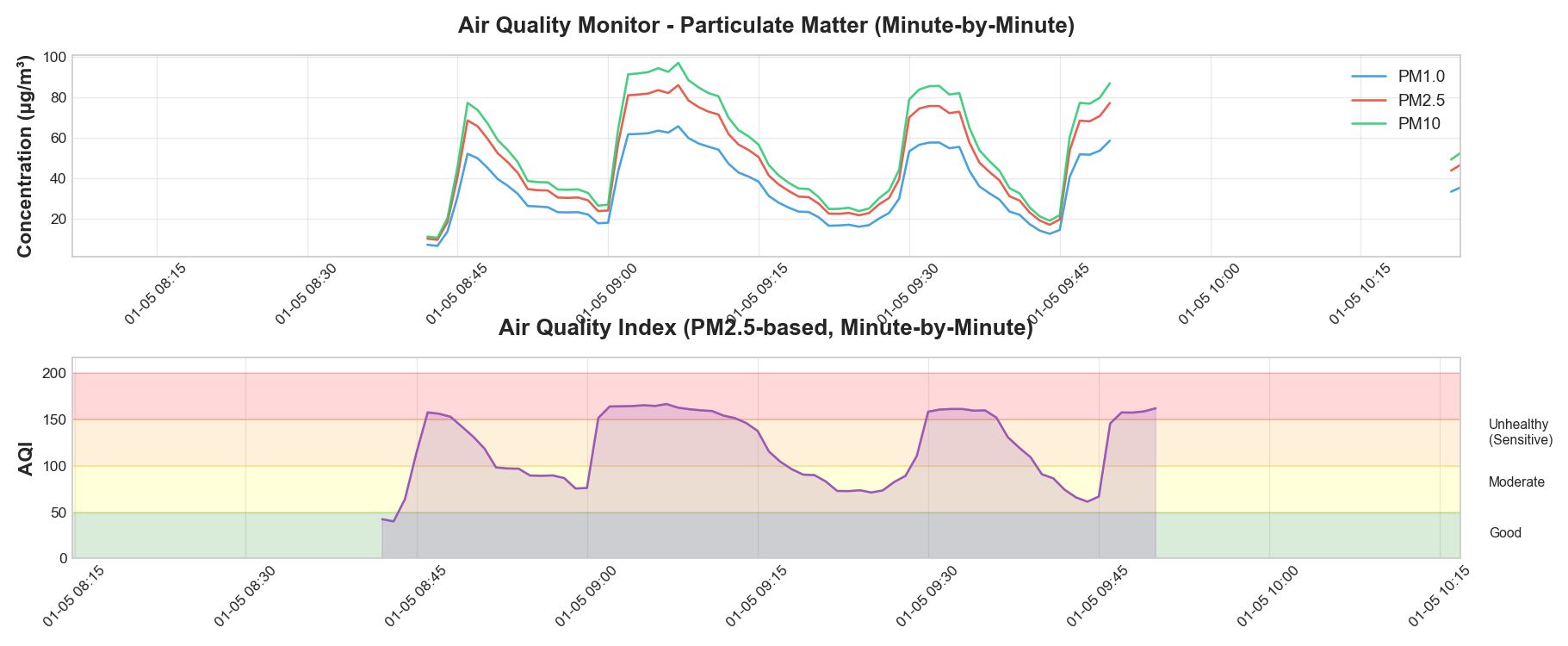
Between 8:15 AM and 10:15 AM, I recorded minute-by-minute data across Bengaluru's peak traffic. The pattern was unmistakable:
🚗 Windows Down = Danger Zone
When I opened the windows, pollution flooded in:
- PM2.5 concentrations surged from 20-30 μg/m³ to 80-85 μg/m³ in minutes
- Air Quality Index spiked to 150+ ("Unhealthy" range)
- That's 5-6 times worse than WHO's safe levels
✅ Windows Closed + AC = Protected Bubble
When I closed windows and activated AC with recirculation:
- PM levels dropped 70-80% within 3-5 minutes
- AQI returned to "Moderate" or "Good" range (50-100)
- The cabin filter was actively cleaning the air I breathed
🧪 The Science Behind Your Cabin Filter
Modern cabin air filters are engineered to trap particles as small as 0.3 microns — that's 30 times smaller than a human hair. When you close windows and activate recirculation mode, you create a protective bubble that prevents fresh pollutants from entering.
- High-efficiency cabin filters reduce in-vehicle PM2.5 by 37-80%
- With recirculation mode, reduction can reach 90%
- Takes just 3 minutes to clear cabin air to office-quality levels
With windows down, you're breathing the highest concentration of pollutants because you're surrounded by their source — vehicle exhaust, brake dust, and tire wear. Studies show PM levels along busy roads are roughly double ambient background levels.
🏙️ The Bengaluru Reality Check
My experiment wasn't conducted in a vacuum — Bengaluru's air quality crisis makes this protection critical:
- 2025 air quality: Worst year in 5 years (avg AQI: 143)
- Good air days: Just 2 days out of 361 in 2025
- PM2.5 levels: 2.8-4× WHO guidelines
- Monitoring gap: Only 11 monitors for a city that needs 41
During peak traffic hours — exactly when I drove — vehicular pollution combines with construction dust and industrial emissions to create a toxic cocktail. For 8.4 million daily commuters, this isn't abstract data. It's what you're breathing right now.
⚠️ Health Impact: Why This Matters
PM2.5 particles don't just irritate — they penetrate deep into lungs and enter your bloodstream:
- Short-term: Asthma attacks, respiratory infections, increased emergency hospital visits, reduced lung function
- Long-term: Premature death, cardiovascular disease, reduced lung function in children
- Alarming stat: 7-11% of dementia cases in people living near major roads are linked to traffic pollution
Traffic-related PM2.5 accounts for 11.4% of the global air pollution disease burden. Your brief commute represents a disproportionately high share of daily pollution exposure — especially during rush hour.
✅ 5 Actions You Can Take Today
1. Keep Windows Closed in Traffic
Non-negotiable during peak hours or on congested roads. Your AC isn't a luxury — it's a health tool. My data showed 70-80% reduction in PM2.5 within minutes.
2. Master Recirculation Mode
- Turn ON: Heavy traffic, behind trucks/buses, visible pollution
- Switch to fresh air: Every 20-30 minutes on long drives to prevent CO₂ buildup
- Result: Up to 90% PM2.5 reduction when used correctly
3. Maintain Your Cabin Filter
- Replace every 12,000 miles (or every 12 months)
- More frequently if you drive in heavy traffic daily
- Consider upgrading to PM2.5-rated filters if available
4. Time Your Commute Strategically
Pollution peaks when vehicles idle. If possible, avoid 8-10 AM and 5-7 PM. Even a 30-minute shift can reduce exposure significantly.
5. Monitor Before You Drive
- AQI < 100: Normal precautions sufficient
- AQI 100-150: Windows closed, recirculation mandatory
- AQI > 150: Consider alternatives (work from home, public transport)
🎯 The Bottom Line
My two-hour experiment proved what research has shown for years: your car's cabin can be 70-80% cleaner than outside air — but only if you use it correctly. That "refreshing breeze" through your open window in Bengaluru traffic? It's delivering concentrated pollutants directly to your lungs. Close those windows. Turn on the AC. Your lungs will thank you.
About this experiment: Conducted in a Skoda Kylaq during morning peak traffic (8:15-10:15 AM) in Bengaluru, January 2026. Air quality monitoring performed using Arduino-based PM2.5/PM10 sensor system with minute-by-minute data logging.
Frequently Asked Questions
Does keeping car windows closed reduce pollution exposure?
How often should I replace my car cabin air filter?
Is Bengaluru's air quality getting worse?
Check Live AQI
Keep Reading
How Indoor CO₂ Levels Affect Your Sleep Quality
Most bedrooms exceed 1,000 ppm of CO₂ by morning. Research shows this silently degrades deep sleep by up to 30%, impairs memory consolidation, and leaves you groggy — a cracked window might be the cheapest health fix you'll ever make.
Understanding Air Pollution in India
India is home to 21 of the world's 30 most polluted cities. Air pollution contributes to over 1.6 million premature deaths annually — understanding the crisis is the first step toward change.
Technology for Clean Air
From AI-powered pollution forecasting to low-cost sensors and electric mobility, India is becoming a testing ground for some of the world's most ambitious clean air innovations.